Tuesday, August 10, 2010

Hydropower Dams Pose Threat To Tribal Peoples


Hydroelectric Dams Pose Threat To Tribal Peoples, Report Warns

Giant hydroelectric dams being built or planned in remote areas of Brazil, Ethiopia, Malaysia, Peru and Guyana will devastate tribal communities by forcing people off their land or destroying hunting and fishing grounds, according to a report by Survival International today.

The first global assessment of the impact of the dams on tribes suggests more than 300,000 indigenous people could be pushed towards economic ruin and, in the case of some isolated Brazilian groups, to extinction.

The dams are intended to provide much-needed,low-carbon electricity for burgeoning cities, but the report says tribal people living in their vicinity will gain little or nothing. Most of the power generated will be taken by large industries, it concludes.

At least 200,000 people from eight tribes are threatened and a further 200,000 people will be adversely affected by the Gibe III dam on the Omo river in Ethiopia. Ten thousand people in Sarawak, Malaysia, have been displaced by the Bakun dam,which is expected to open next year, and a series of Latin American dams could force many thousands of people off their land.

The authors say enthusiasm for large dams is resurfacing, driven by a powerful international lobby presenting them as a significant solution to climate change. Lyndsay Duffield, said: "The lessons learned [about the human impact of large dams]last century are being ignored, and tribal peoples worldwide are again being sidelined, their rights violated and their lands destroyed."

The report says the World Bank is one of the biggest funders of destructive dams, despite worldwide criticism in the 1990s for supporting such projects. Its portfolio now stands at $11bn, with funding up more than 50% on 1997.

The UN now subsidises dam building via the clean development mechanism (CDM), which allows rich countries to offset their greenhouse gas emissions by investing in clean energy in poor countries. The watchdog group CDM Watch says more than a third of all CDM-registered projects in 2008 were for hydropower, making them the most common type of project vying for carbon credits.

Concern is growing over the role of China, now the world's largest builder and funder of big dams. The Three Gorges Corporation, firm behind the controversial Three Gorges dam, which has displaced more than a million people from around the Yangtze river in the last 20 years, has been contracted to build a dam on the land of the Penan tribe in Sarawak. China's biggest state bank, the Industrial and Commercial Bank of China, may fund Gibe III in Ethiopia, to be Africa's tallest. The Chinese government has financed the majority of dams built in China, which account for about half the global total of large dams.

The report says tribes have borne the brunt of the development over the last 30 years. In India, at least 40% of people displaced by dams and other developmentprojects are tribal, though they make up just 8% of the country's population. Almost all of the large dams built or proposed in the Philippines have been on the land of the country's indigenous people.

The report accuses banks and dam builders of consistently underestimating the number of tribal people affected. "There is an endemic tendency within the dam industry to significantly underestimate the number of people to be affected by their projects," it says.

"The World Bank's review of big dam projects over 10 years found that the number of people actually evicted was nearly 50% higher than the planning estimates."

Survival International called for all hydroelectric dams on tribal peoples' land to be halted unless the tribes have given full consent. "In the case of isolated or uncontacted tribes, where consultation is not possible, there should be no development of hydroelectric dams on their territories," it said.
_____________

Greed has killed humanity. And hydropower is the new "scheme" for companies to back through banks to gain "carbon credits" in order for them to keep doing business as usual as they push indigenous peoples off their land. How ironic. . Hydropower is not renewable, especially in lands where drought is prevalent, agriculture and fish stocks suffer through diversion or flooding, culture and history is destroyed, and environmental degradation is a part of it. Mega dams are also detrimental to the stability of the Earth's crust, and dam building is a source of CO2 emissions, with waste built up in dams contributing to climate change/ global warming, (or pick the term of your choice) through methane emissions. Insanity.
_______

Hydropower- Not As Clean As You Think

The sun shines over our rivers every day, let's use it!

International Rivers

You have a voice. Speak out for our rivers and the indigenous people of our world!

Wednesday, August 04, 2010

UN vote declares right to clean water and sanitation a human right: U.S. abstains


The United Nations General Assembly declared today that clean drinking water and sanitation are human rights.

Rights to water have been included in conventions on the rights of women, children and those with disabilities, but never as a general human right.

Of the 192 member states: 122 voted in favor of the non-binding resolution, zero against and 41 abstained, including the United States.

John F. Sammis, Deputy Representative to the Economic and Social Council, explained in a statement that the U.S. felt the resolution potentially undermines work being done by the Switzerland-based Human Rights Council to situate a right to water within the body of international law.

According to Sammis’ statement: “The United States regrets that this resolution diverts us from the serious international efforts underway to promote greater coordination and cooperation on water and sanitation issues. This resolution attempts to take a short-cut around the serious work of formulating, articulating and upholding universal rights. It was not drafted in a transparent, inclusive manner, and the legal implications of a declared right to water have not yet been carefully and fully considered in this body or in Geneva.”

The U.S. mission to the U.N. declined to elaborate on the statement.

In 2008 the High Commissioner for Human Rights appointed an independent expert, Portuguese lawyer Catarina de Albuquerque, to investigate and clarify international human rights obligations pertaining to the rights to water and sanitation and to document best practices. Submitted last year, De Albuquerque’s first report focused on sanitation.
_________________________________________________
"John F. Sammis, Deputy Representative to the Economic and Social Council, explained in a statement that the U.S. felt the resolution potentially undermines work being done by the Switzerland-based Human Rights Council to situate a right to water within the body of international law."

*****
Well gee, what a coincidence. Nestle's global headquarters are in Switzerland too. This is shameful to me. One vote does not negate another. Voting yes to this would simply verify that the U.S. stands up for clean water and sanitation as a human right. This constant obfuscation regarding interference with other work is just a cop out.

I would say it is a combination of self importance and arrogance mixed in with greed and selfishness that doesn't make for a very good recipe for human survival as it stands now. As far as water is concerned, it is the new commodity for rich countries, governments, militaries, and corporations to exploit. There is now a water market, and a water exchange coming into being much like the carbon exchange, which inflates value for profit at the expense of those who need it. The poor of this world are being bombarded by this corporate mentality that does not know what morals are. All they know is personal gain while making false choices.

I think that ultimately the decisions they make will come back to them personally, which they are blind to as well living in their little money bubbles. That is the one piece of this puzzle they are missing or refuse to see... that they too are part of the very world they are exploiting and sooner or later it will reach them. Perhaps that is then truly what needs to be seen on a global scale in order to see a real change in this world.

The bottomline is that WATER is the substance of life and it is being polluted, toxified, wasted, HYDROFRACKED, PRIVITIZED and now evaporated by climate change in the form of desertification, water evaporation, sea level rise, and glacier melt (along with erratic and changing rainfall patterns that are causing massive floods) at a pace that will see an exponential rise in unliveable, water scarce and drought stricken areas by 2030. That in turn will cause a mass migration of refugees looking for water to live. Which in turn will increase terrorist activity ( as we now see in Pakistan) and conflict which we see between India and Pakistan (as the Indus Water Treaty breaks down) China and India, African states, Israel and Palestine, Turkey and Iraq and as a matter of fact the whole MIddle East and perhaps to come the U.S. and Canada, and as predicted, a mass migration from Mexico to the U.S giving a whole new spin to the immigration "problem."

Protecting our most precious resource is now our primary moral imperative.

Saturday, July 10, 2010

BP ecocide: cap on gusher removed, oil flows freely


Cap On Gusher Removed, Oil Flows Freely

Robotic submarines removed the cap from the gushing well in the Gulf of Mexico on Saturday, beginning a period of at least two days when oil will flow freely into the sea.

It's the first step in placing a tighter dome that is supposed to funnel more oil to collection ships on the surface a mile above. If all goes according to plan, the tandem of the tighter cap and the surface ships could keep all the oil from polluting the fragile Gulf as soon as Monday.

BP spokesman Mark Proegler said the old cap was removed at 12:37 p.m. CDT on Saturday.

"Over the next four to seven days, depending on how things go, we should get that sealing cap on. That's our plan," said Kent Wells, a BP senior vice president.

It would be only a temporary solution to the catastrophe unleashed by a drilling rig explosion nearly 12 weeks ago. It won't plug the busted well and it remains uncertain that it will succeed.

The oil is flowing mostly unabated into the water for about 48 hours — long enough for as much as 5 million gallons to gush out — until the new cap is installed.

The hope for a permanent solution remains with two relief wells intended to plug it completely far beneath the seafloor.

Engineers now begin removing a bolted flange below the dome. The flange has to be taken off so another piece of equipment called a flange spool can go over the drill pipe, where the sealing cap will be connected.

The work could spill over into Sunday, Wells said, depending on how hard it is to pull off the flange. BP has a backup plan in case that doesn't work: A piece of machinery will pry the top and the bottom of the flange apart.

On Friday, National Incident Commander Thad Allen had said the cap could be in place by Monday. That's still possible, given the timeline BP submitted to the federal government, but officials say it could take up to a week of tests before it's clear whether the new cap is working.

The cap now in use was installed June 4, but because it had to be fitted over a jagged cut in the well pipe, it allows some crude to escape. The new cap — dubbed "Top Hat Number 10" — follows 80 days of failures to contain or plug the leak.
______

My question is, why the wait of two days or more to replace the cap thus allowing millions more gallons of oil to flow freely into the sea? Why not have the new cap ready to place on once the old one is taken off?

There has been much I have been reading on this, and I can say with sureness that the amount of methane mixed with other chemicals and toxic Corexit have made the Gulf Of Mexico a toxic stew that over time and even now will be lethal to live near. All the way up the food chain from micro organisms to whales, this toxic soup has affected the web of life. Yet, no moral outrage from this government or the people en masse.

How BP is even being allowed to take this cap off without replacing it the same day is ludicrous. It seems however, that words are not having effect anymore, so perhaps song is where we need to go:


I'm beginning to think this wasn't an accident.

Millions Face Starvation As Niger Prays In Vain For Rain


Millions Face Starvation As Niger Prays In Vain For Rain

To the north of Niger, the creeping Sahara; to the south, oil rich and agriculturally lush Nigeria – this nation straddles the Sahel – dry, hot and cruel. It has suffered catastrophic droughts – 1974, 1984 and 2005. And now, another.

Five times the size of the United Kingdom, Niger is one of the poorest nations on earth with child mortality worse than Afghanistan. The absence of regular rainfall throughout 2009 has led to poor harvests, lack of grazing for animals and food reserves exhausted.

Hungry people have started adding "bitter" berries to their diet – this is survival food, normally unpalatable but when starving, the unpalatable becomes welcome – essential.

The tipping point, according to one expert is about a week away – 15 July. That is when the rainy season is expected. But the starving livestock may nibble away whatever green-shoots push through.

Ten leading aid agencies launched a joint appeal yesterday, warning that up to 10 million people across the eastern Sahel, faced acute hunger. The United Nations agrees, it says that the situation is of a magnitude not previously seen. Niger is at the centre of this crisis, with half of its population – 7 million people – going hungry.

The statistics, generally, for this West African country, are overwhelming – less than a third of the people are literate: boys spend on average five years in school; girls, just three. Two-thirds of the people of Niger live beneath the poverty line, 85 per cent on less than $2 – or £1 – a day.

But set that against these great ironies: Niger has uranium aplenty and sells it to France's burgeoning nuclear power industry. The fruits of this trade are hard to see. And there is oil, as in northern neighbour Libya. The partners are the Chinese who will begin production soon. Again, there is little hope the benefits of geological
benevolence will bless these beleaguered people. Half of Niger's government budget derives from donor aid. The proceeds of its natural resources will benefit Paris and Beijing before Niamey.

Heading east, into the badlands, we pass acres of planted millet and the occasional pool of orange, muddy water from the recent short, sharp rains. Two glaring truths are evident: the curative, durable work can and is being done; but the vicissitudes of climate makes it all a gamble at the edge of survival.

The "swollen-tummy" syndrome may not have taken root everywhere yet but with real fears that the harvest of 2010 will be a frighteningly small affair. And by then, for thousands, it will be too late.

At a health centre in Goumbi Kano, established by the charity Care International, one of those taking part in the appeal, and part-funded by the Niger government, I meet two women who had walked 8km, with their malnourished babies, to see Dr Moustaphe Chaibou.

Hasana and Maimouna, and babies Farida and Saredja, have been regulars for six weeks.

"I have no milk. When the baby cries, I give her millet," Hasana says.

The babies are showing signs of improvement. They get their regular prescription of a "plumpy nut" product, antibiotics and anti-malarial drugs. Still frighteningly underweight for their age, the 17 -month old was still a babe in arms, the 10-month old like a newborn – both about 20 per cent under the expected weight for their ages.

They left their village after prayers at 5.30am and arrived at opening time, around 8am. Then they headed back before the noon heat.

I asked the doctor what would happen if the rains failed: "Catastrophe, désolé," he said in perfect French.

The drought of 2009 made the September harvest poor – what it yielded was cornered by speculators – poor people had very little to see them through and it is now gone. The "biscuit-barrel" grain stores are empty and have been for weeks.

It has already been a long, hungry wait ameliorated by aid workers, the World Food Fund and other UN agencies. But they have got their sums, by all accounts, badly wrong. They budgeted for 1.7 million hungry souls but find themselves $97 million short . The aid community say the numbers in need are closer to 7 million – and about 3 million are in desperate need now. The target, recently raised, was too low, the budget inadequate and still under-funded.

The people still have until September to wait for handouts and hope.

In 1973 the community of N-Guigmi hardly existed. It now has a population of about 15,000 – people who were driven there from a pastoral existence in the countryside by drought and famine to a town, and a new way of life.

It is a terrifying template for this country unless a lasting solution is found. Those souls gave up waiting and gave up hope.

We meet Ishan Ila Gamma, a widow with eight dependents, in Tajae Nomade village. "I used to have more than 30 animals," she says. "Now I only have one good one remaining. I have been forced to sell all the others at cheap prices. I was forced to go to the city, I beg and sell herbs."

Again, the people of Niger are playing the waiting game – waiting for rain and for an autumn harvest; waiting for the UN and the World Food Programme to get their sums right and attract the donations to pay for the food aid; or waiting for the world to add Niger to the desperate list of Ethiopia, Sudan, Eritrea.

cont.
___________________
If I truly believed praying for rain would bring it to these people to see their crops grow, I would. This is truly a human catastrophe. Global warming is now gravely affecting these areas. Per scientists this will be the warmest year on record. Animals are already dying, and many of all species will follow the longer we continue to think this is just a political grandstanding game in this country. Drought is now affecting close to 40% of our world, and as global temperatures increase it will become more common as will starvation. If their rains do not come soon, as was said in this article it will be "catastrophe, désolé." And this is just the beginning. But there are things you can do...


Tree Nation In Niger

Tree Nation is a wonderful organization I am proud to be a part of that is dedicated to planting 8 million trees in the shape of a heart in the heart of Niger to provide mitigation and adaptation to climate change, fight poverty, hunger and deforestation, and bring water back to the roots of this land.

You can plant a tree in Niger from your modem and make a difference in the lives of many people. Solving this crisis will not come from politicians, it will come from us.

Moringa Oleifera is the answer!

Number of dams by country

I will try to find a more updated source, but as of 2008 Africa had 1269 dams. Could be one reason why so many countries there are now experiencing drought as well. Using solar power in Africa on a massive scale and breaching the dams that are unnecessary and were only built to make government officials and construction companies richer would also go very far in bringing back agricultural lands to Africa and mitigating global warming, hunger and poverty.

Just as a point of reference, according to this list China had 22,000 dams (yes, thousand) and Australia 486. Two more places where drought is pronounced and life threatening with failing crops. The correlation between excessive dam building that causes environmental devastation, exacerbation of CO 2 emissions, loss of fish stocks and agricultural land and diversion of water sources in my view cannot be denied.

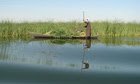
Iraq's Marshes Reborn


Iraq's Marshes Reborn

One of Saddam Hussein's greatest acts of ecological destruction – the draining of the Mesopotamian marshes – has been reversed as birds and rivers return to the region

Iraq's marshes drained by Saddam in the 90s to punish rebellious marsh inhabitants are now thriving once more. Photograph: Korsh Ararat, Omar Fadil and Mudhafar Salim/Nature Iraq

Saddam Hussein's draining of the Mesopotamian marshes of Iraq – recorded as the Garden of Eden in the Bible - was one of the most infamous outrages of his regime, leaving a vast area of once-teeming river delta a dry, salt-encrusted desert, emptied of insects, birds and the people who lived on them.

But nearly two decades later the area is buzzing and twittering with life again after local people and a new breed of Iraqi conservationists have restored much of what was once the world's third largest wetland to some of its former glory.

The story of this once almost impossible restoration is told in an exhibition of photographs that has opened in the UK. They show the huge expanses of reeds and open water – now at least half the size of the Florida Everglades – where plants, insects and fish have returned, creating a vast feeding area for migrating and breeding birds, including the majestic Sacred Ibis, the endemic Basrah Reed Warbler and the Iraq Babbler, along with most of the world's population of Marbled Teal ducks, bee-eaters and many more.

"We call them stop-over sites, refuelling sites," said Richard Porter, Middle East advisor for the conservation group Birdlife International, who has helped train biologists and other experts for the local Birdlife partner Nature Iraq. "They are as important as the breeding and over-wintering grounds for species; if you have got to make a journey from central Africa to norther Europe and Asia, and you've got nothing to feed on, you're stuffed."

The Mesopotamian marshes originally made up an area more than three times the size of Norfolk, where the exhibition is showing, in Holt. It sprawled across thousands of square kilometres of floodplain where the Euphrates and Tigris rivers divided into a network of tributaries meandering and pulsating south to the Arabian sea. They were home to more than 80 bird species, otters and long-fingered bats, and hundreds of thousands of Marsh Arabs who grew rice and dates, raised water buffalo, fished and built boats and homes from reeds.

In the early 1990s, this way of life came to an abrupt end when Hussein ordered the marshes to be drained to punish the local population for an uprising after his failed invasion of Kuwait, a problem exacerbated by the continued construction of dams upstream.

He ordered the area to be hemmed in by constructing around 4,000km of earthen walls that towered up to 7m above the unbroken flat landscape. The wetlands retreated to as little as 5-10% of their original size, according to a 2001 United Nations Environment Agency report.

After Hussein was toppled by American forces in 2003, Azzam Alwash returned from his adopted home in the US to the area, where he had lived for part of his childhood, and learned to hunt ducks with his father while they inspected the irrigation ditches. Alwash found the local people who had stayed had already begun to break up the walls with shovels or earth diggers, and they have continued to do so. They have destroyed up to 98% of the embankments, he told the Guardian, "not because they are tree-huggers or bird-lovers, but because it's a source of economic income to them, because they can harvest reeds and sell them. They can fish and feed a family or sell them to earn extra income."

Alwash, a civil engineer, set up Nature Iraq and has organised training for graduates who help with monitoring work. "We take guards with us with Kalashnikovs, but the most difficult part is the road between [the capital] Baghdad to the marsh," said Alwash. "Once I'm inside the marshes it's relatively safe."

About half the original marshland has been restored - even more had been reinstated, but there was a setback last year because of a drought. Nature Iraq has now drawn up a plan to cope with the diminishing water flows from dams upstream in Turkey by channelling irrigation water back into the rivers and building a barrage to retain meltwater from the mountains and create a "mechanical flood" of water to replicate the important pulses of freshwater that wash through the marshlands every spring.
end
__________
Iraq's Marshes and Corporate Control

This was an entry I wrote on the marshlands about four years ago, discussing lack of water in Iraq, corporate control of water in Iraq by Bechtel, and the hope that any restoration of this diverse and beautiful area would be left in the control of the people there and not the corporate beneficiaries of the invasion.
____
Hanging Gardens of Babylon

But, can the marshlands compare to the Hanging Gardens of Babylon? Some dispute their existence but archeologists claim to have uncovered structure that lends to the story of their existence. Just the mechnism used to bring water from the Euphrates to irrigate the mountain gardens is incredible.


Monday, May 31, 2010

Oil still gushes out in the Gulf killing our water

I cannot describe in words to you the pain my soul feels now. I am not even a resident of this area and cannot begin to understand what it is like to lose your livelihood. However, I am a citizen of this world, and a sentient being with a connection to the Earth and a deep appreciation for understanding how it is all connected to us. This hurts us all, and it will affect generations of humans and all species for decades to come. That is why I have been hesitating regarding writing much about this here of late, because it is so emotional for me. To think of the extent of damage environmentally that is now being wrecked upon this area of the world and the ripple effect it will have seems too much to bear.

I don't know how good some of you are at connecting dots in situations, but this is a blatant example of corporate/governmental good ole boy a** covering, and using a situation to its fullest advantage to make a profit. I am going to post an article here that I posted to Current.com regarding the dispersant Corexit that is being used by BP in order to illustrate this point. To say these people are not criminals that should be arrested for crimes against nature is to be one devoid of logic and morality. However, knowing the corrupt system we live in I fear it will have to be the people who take matters into their own hands. I truly do wonder though if we have the moral courage to do so now.

The US is addicted to oil, and we need an intervention. I surely thought this would be it. Yet, I still see people pulling into BP stations (shame on you) as if oblivious to the environmental holocaust being perpetrated by BP and their collusion in it by supporting them. And yes I know, oil on the whole is not good and we should be much more vocal about calling for CLEAN, AFFORDABLE, ALTERNATE ENERGY. SO WHY AREN'T WE? I did notice the SUN shining over the toxic oil sheened Gulf for all of these 42 days that this catastrophe has been allowed to continue that could power our lives. I did notice the WIND blowing in offshore breezes that holds the power we need to light our homes. The dichotomy was actually quite sad in seeing the oil soaked marinelife and wildlife struggling to live as well... just "collateral damage" to the bastards looking to now stall for time until AUGUST when their relief wells will supposedly be done, of course, without any guarantee they too will work to stop this bleeding of our Earth.

The Black Tide of the Gulf is our moral ineptitude and apathy laid out in front of us. It is everything we are, and it is also representative of everything we could be as a species if we finally use this disaster to understand our true place in this world. And it is not to be the arrogant all powerful masters we portend to be (and actually suck at.) It is to be a stewardship species that cherishes and respects the resources given to us as gifts and the species that live in sympatico with us. It is about respecting that most precious resource- Water. There will be no explaining ourselves should we fail in seeking justice for our planet and those who cannot speak for themselves. And perhaps for me, to think that after all that has happened that we as a species will not rise to the task is even more heartbreaking. I surely hope I am wrong. Please, let me be wrong.

BOYCOTT BP, CALL FOR CLEAN ENERGY NOW.

BP oil blog

Some good information here.

Corexit Is Killing The Gulf

A must read.


Phillipe Cousteau: "This is a nightmare"

Pass this on to counter the lies.

BP oil disaster live news

Thursday, May 20, 2010

Gulf oil spill killing birds and sealife


Gulf oil spill-pictures


Pictures of the extent of this ecocide as the oil continues to gush out of the well 31 days after the Deepwater Horizon blew... THIRTY ONE DAYS. Scientists estimate that it could well be 100,000 gallons not 5000 gallons per day escaping from this well, which surely explains how it has now created subsurface plumes and become a part of the current loop that will in time more than likely carry it up the East Coast to spread its cancer.

You cannot look at the photos of these animals and not be emotionally struck by them. Our very biodiversity and the ecosystems they and we depend on to live are now in great danger. And yet, all we get from BP are lies, coverups, and one failed attempt after another to plug this well and aggressively seek to save the wildlife and sealife that inhabits this once beautiful part of our country. And all we get from this government is a reshuffling of the incompetence that aided in it and feigned outrage as BP's stock price actually rises.

There is no way to recover the moral conscience lost in regards to this gash that now
bleeds our planet. It is an open wound that reveals to all the price paid when what is less important is given a false value over those things whose value is immeasurable.

I really don't know how much more I can watch of this unfolding. Water is what gives us life, and we are killing it... and my heart is aching. I do know this, however. I know that as someone like so many who cares for the sustainability of this planet and the future of our children, I will not rest until those responsible for this pay.

More to come.

Another World Water Day Gone

We see another World Water Day pass us by. The theme, Water For All, signifies that though some progress has been made we are woefully behin...